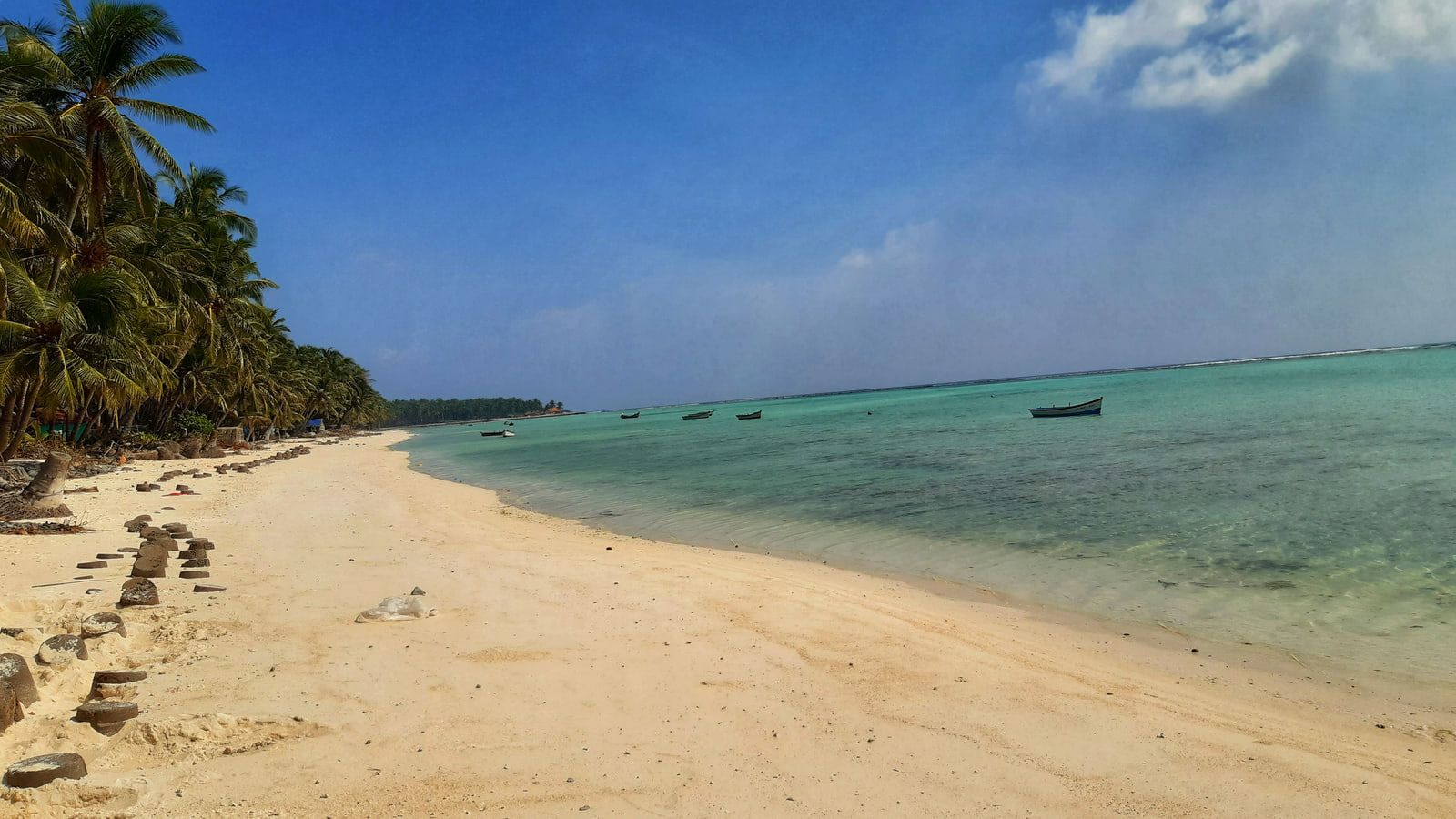
Kalpeni Atoll
Kalpeni: plan around the package format
Kalpeni suits a lagoon-focused day visit, but the package format decides where you sleep and how long you spend ashore.
Reviewed 17 Sept 20265 sources5 min read
Confirm the current package, sailing, permit, activities and night-by-night accommodation before paying.
On this page
- Atoll
- Kalpeni Atoll
- Area
- 2.79 km²
- Access
- Sea, or Agatti and boat
- Permit
- Required
- Reviewed
- 17 Sept 2026
- Kalpeni, Tilakkam, Pitti and Cheriyam form one atoll
- Koomel Beach has bathing huts and changing rooms
- Official package pages describe Kalpeni as a daytime ship visit
Kalpeni is best planned as a lagoon stop within a confirmed itinerary, not from a list of attractions alone. The official pages support swimming, snorkelling, reef walking and small non-motorised water activities. They also show why the package format matters: a named island visit does not necessarily mean an overnight stay on that island.
Sources reviewed on 17 September 2026.
What the official island pages support
The Lakshadweep Administration says Kalpeni, Tilakkam, Pitti and uninhabited Cheriyam form a single atoll. Its visitor page lists swimming, snorkelling, reef walking, kayaking, sailing and pedal boating, and notes bathing huts with changing rooms at Koomel Beach.
These are destination-level descriptions, not a promise that every activity will run on every visit. Ask the operator which activities are included, which cost extra and what happens when weather or sea conditions prevent them.
Access is tied to the itinerary
The Administration’s tourist-package page describes Lakshadweep Samudram as a five-day cruise visiting Kavaratti, Kalpeni and Minicoy. Island touring and lunch take place ashore, while nights are spent onboard the ship. The SPORTS itinerary likewise presents Kalpeni as a daytime call with lagoon activities and sightseeing before passengers return to the ship.
That makes Kalpeni a practical fit for travellers who want a multi-island cruise and a lagoon-focused day. It is a poor fit if the goal is automatically an island-resort stay, because the package name alone does not establish where the nights are spent.
Read island stay versus ship package before comparing a Kalpeni itinerary with a resort-based trip.
Booking checks
Before paying, get the following in writing:
- the current sailing dates and the sequence of islands;
- where every night is spent;
- the time expected ashore at Kalpeni;
- which activities are included or charged separately;
- who arranges the Lakshadweep permit;
- the cancellation or substitution policy if the ship cannot call at Kalpeni.
The Administration states that a permit is required for tourists visiting Lakshadweep. Eligibility and island access can differ, so the operator should confirm that the itinerary and permit match the traveller.
Who should choose Kalpeni
Choose Kalpeni when the priority is lagoon activity within a ship itinerary and a daytime island stop is acceptable. Look at a different format when the priority is a confirmed island stay, a specific resort standard or several unscheduled days in one place.
Use the best-island guide for the wider route decision and the Lakshadweep ship guide for the practical difference between transport and a packaged cruise.
What was removed from the old guide
The previous page used first-person experience and made unsupported claims about water depth, wildlife, safety, ship timings, independent accommodation, prices, food, internet, the 2004 tsunami and access to the smaller islands. Those claims have been removed.
This page now keeps only planning facts supported by current Lakshadweep Administration and SPORTS pages, with live details left for confirmation at booking.
Questions
What can visitors do at Kalpeni?
The Administration lists swimming, snorkelling, reef walking, kayaking, sailing and pedal boating. Actual activities depend on the current operator, weather and sea conditions.
Does a Kalpeni package include an overnight stay on the island?
Do not assume that it does. The official Lakshadweep Samudram description places nights onboard the ship and brings visitors ashore during the day.
Who is Kalpeni best suited to?
It is a strong fit for travellers who want lagoon activities within a multi-island ship itinerary. Travellers seeking a resort stay should choose only after the operator confirms the accommodation format in writing.
Is a permit required?
Yes. The Administration says tourists need a permit to visit Lakshadweep. Confirm that the chosen package handles the permit and check any eligibility limits before paying.
Sources
- Lakshadweep Administration: Kalpeni tourist placelakshadweep.gov.in · read 17 Sept 2026
- Lakshadweep Administration: Kalpeni island profilelakshadweep.gov.in · read 17 Sept 2026
- Lakshadweep Administration: Tourist Packageslakshadweep.gov.in · read 17 Sept 2026
- Lakshadweep Administration: Places of Interestlakshadweep.gov.in · read 17 Sept 2026
- SPORTS Lakshadweep Tourism: Tour Packageslakshadweeptourism.com · read 17 Sept 2026
Permit rules, fees, schedules and island access change without notice. Where a figure on this page matters to your booking, open the source above and check it against the current official position before you pay.