Agatti Island, Lakshadweep — Travel Guide 2026
Complete Agatti Island guide: how to reach, where to stay, what to do, best time to visit. Flights from Kochi, lagoon snorkelling, scuba diving, and more.
Highlights
- The only island in Lakshadweep with an airport (IATA code AGX)
- About 12 km long, less than a kilometre wide — walkable end to end
- Shallow lagoon spreads over 15 sq km
- 30m+ underwater visibility on the best days
- Agatti Island Beach Resort is the only private hotel on the island
The ATR-72 descends over what looks like bathwater for the final ten minutes of the flight from Kochi. Turquoise, fading to emerald, stretching to a thin white line that turns into a runway at the last possible second. Landing here feels like a trick. The strip was reclaimed from the reef itself, and on a window seat you see coral passing under the wings while the gear comes down.
That moment is how most people experience Lakshadweep for the first time. Agatti is the airport. If you’ve flown in, you’ve been on Agatti already, whether you planned to stay or not.
Most do. A few transfer straight to a Bangaram boat and never really look around. They miss something.
What Agatti actually is
A sliver. About twelve kilometres long, less than a kilometre at its widest, narrower than a Mumbai runway at several points. You can walk it end to end in under two hours without hurrying. Coconut palms cover the spine; a single tarmac road runs most of the length. The population hovers around 7,600, almost all Malayalam-speaking Muslim, fishermen and service workers and the small civil administration that keeps the airstrip running.
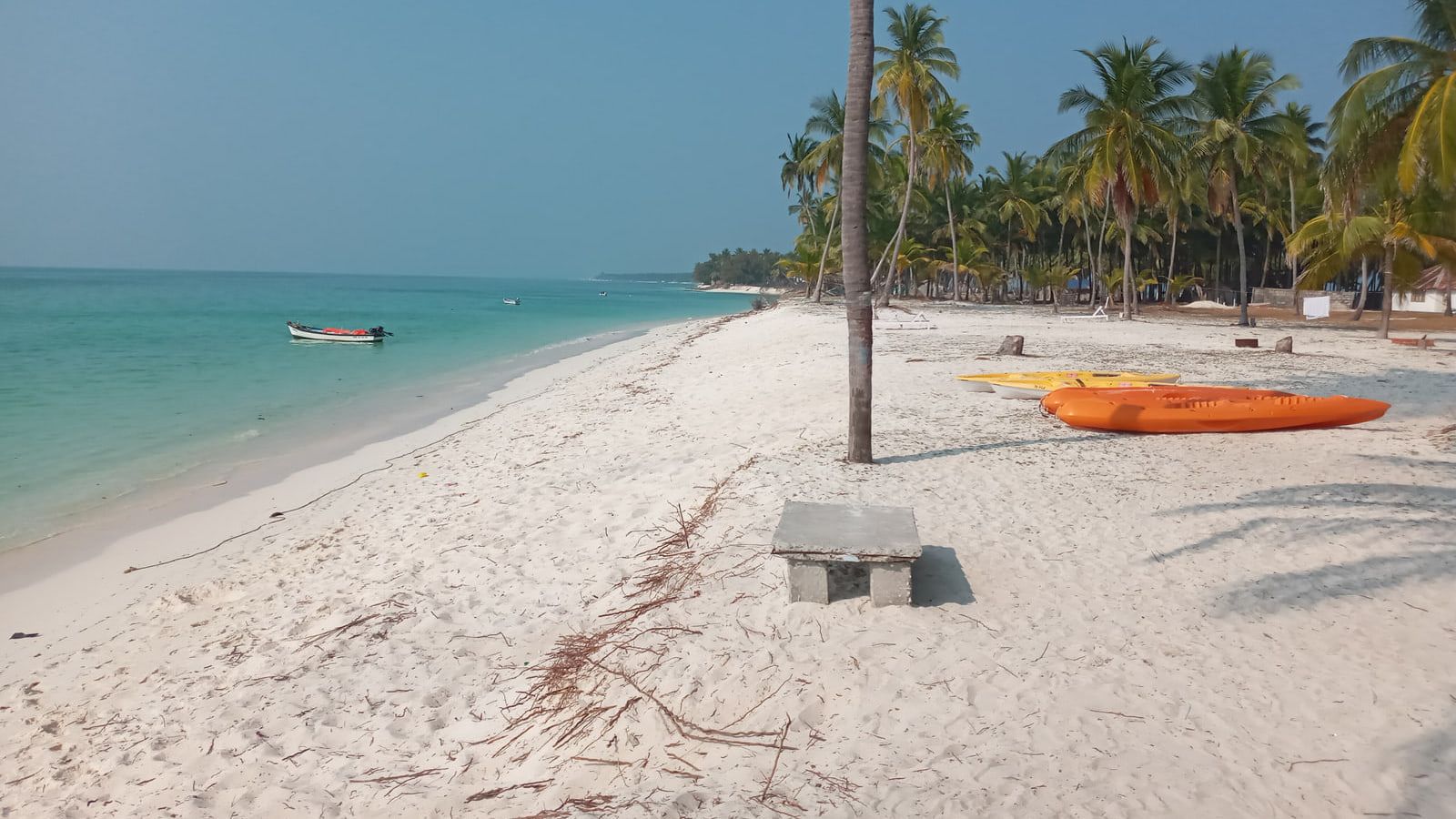
On either side of the island there’s a lagoon. The eastern one is shallower and the western one has the deeper drop-offs, which is useful to know if you’re trying to pick a snorkel spot. The entire 15 square kilometres of lagoon sits inside a coral ring that shields it from open ocean. Waves break outside the ring. Inside, the water is flat enough that a kayak feels redundant at some hours.
Why you’d come here
Three-ish reasons that I’ll try not to write as a list.
First, access. Agatti is the only airstrip in the archipelago. If you’ve got under a week, this is where your trip is centred regardless of your preference. Fighting that fact wastes days.
Second, the lagoon. The combination of depth, visibility, and reef health at Agatti is unusual. I’ve swum at a lot of tropical beaches. The reef at the edge of Agatti’s lagoon in February was better than Havelock, better than most Maldives local-island beaches I’ve tried, about even with Bangaram (which is the gold standard and significantly more expensive). The entry cost is a ₹300 pair of reef shoes plus a ₹400 snorkel rental.
Third, a hotel. One, specifically. Agatti Island Beach Resort is the only private property on the island and bookings slide into the distance every season. You reserve in September for a January trip or you sleep in a SPORTS hut, which is perfectly fine but not the same experience.
Everything else — the village walks, the sunset on the west beach, the small eating house near the jetty where an ageing cook does a tuna fry that’s better than everything at the resort — that’s the slow-release reward you get after the first day.
Getting there
Flying: IndiGo, Kochi to Agatti, once daily. Morning departure around 5:45, landing around 7:10. The return flight goes back around 11:40 and arrives Kochi by 1:05. Fare range is ₹7,000-15,000 one way depending on season, with December-January peaking and June-September often not running at all.
The ATR is a 68-seat propeller aircraft, which sounds underwhelming until you realise how short Agatti’s runway is. A jet won’t fit. The ATR does because its short-runway performance is real, but even then, crosswinds over 15 knots mean the pilot turns back to Kochi or diverts. This happens maybe once a month.
Buffer a day on return. I mean it. If you have an international connection out of Kochi on the same evening as your Agatti flight and the flight cancels, you’ll be paying for rebooking out of your own pocket.
Ships: several run the Kochi-Lakshadweep route. MV Kavaratti, MV Lakshadweep Sea, MV Amindivi and others. Agatti is a regular stop on multi-island routes, direct crossings take 14-18 hours, and prices range from ₹3,200 (bunk class) to ₹14,000 (deluxe cabin). The ship is an experience in itself and about a third the cost of flying.
Once you’re on Agatti, there are a few bicycles, two or three functional taxis, and a lot of walking. Nobody’s in a hurry.
The reef, and what to do with it
You’ll probably start with snorkeling from the resort beach. Wade out about 20 metres in shin-deep water until the coral starts, then follow the reef line north or south. In 90 minutes you can see parrotfish in five colour variations, angelfish moving in pairs, reef sharks if you’re patient, turtles if you’re lucky. I’ve had a whitetip reef shark cross my field of view close enough to make my breathing skip, and that was on a Tuesday afternoon in January, twenty metres off a public beach.
Scuba, if you’re certified, through the resort dive centre. Boats run to sites outside the lagoon — the outer wall, the pinnacles off the north end. The diving is good. Not Bangaram-good or Kadmat-good, but proper reef diving with decent visibility and a real chance of seeing something big.
Not certified? The dive centre does a discover-scuba session in the lagoon for ₹4,500-6,000 that gets you breathing underwater for about 40 minutes. Safer than any first open-water dive you’ll do elsewhere because the lagoon is shallow and calm. Good introduction.
Glass-bottom boat rides for people in your group who won’t put their face in the water. Kayak rentals at the resort beach — the transparent-hull kayaks are worth the extra ₹500 per hour at least once for the novelty. Sport fishing seasonally, usually November through March, for yellowfin tuna on half-day trips.
The non-water thing worth doing: walk the length of the island at sunset. Start from the resort beach around 5pm, head toward the airport end, cut through the village paths, come back via the western side. It takes about 90 minutes and you’ll see more of how people actually live here than any brochure shows you. The light at 6pm is unreasonable.
Where you sleep
Agatti Island Beach Resort is the anchor. Beachfront cottages, full board included because there’s nowhere else to eat in comparable quality. Rooms are simple — a firm bed, functional AC, a bathroom with intermittent hot water. You are not here for the room. You’re here for the 30 metres between your door and the water.
Rates vary from ₹8,500 per night off-peak to ₹14,000 in December-January peak. Book early. I’ve tried to book Agatti Beach Resort on six weeks’ notice in November and been told no. Three months is safer; four months is safer still for peak dates.
SPORTS huts exist on Agatti and cost about a fifth of the resort price. They’re fine. Basic, functional, clean enough. No hot water reliably, AC that might work, shared bathrooms in some tiers. Book through the SPORTS department or whoever is handling your permit package.
Homestays — fewer than five actively taking tourists, usually arranged via an agent rather than public listings. The experience is more local, the food depends heavily on what the family is eating that day, and the cultural immersion is higher. Not for everyone. Excellent for the right visitor.
Nothing else. No mid-tier options, no Airbnbs, no competing hotels. Agatti’s accommodation market is thin by design. The Administration caps tourist arrivals via the permit system and that ripples into how many beds exist.
Practical stuff
The ATM near the main jetty works about 70% of the times I’ve walked past. Don’t rely on it. Pull cash in Kochi.
BSNL has the best mobile coverage. Jio drops in and out, usually works in the resort area. Airtel is basically absent. If connectivity matters, buy a BSNL prepaid SIM before you fly.
Medical: a primary health centre on the island, basic capability. For anything serious, you’re flying back to Kochi. Travel insurance with evacuation coverage is worth the ₹800-1,500 it costs for a week.
Alcohol: none. Don’t bring any in your luggage. The security screening at Kochi is casual but the screening at Agatti isn’t, and a bottle found in your bag creates permit problems that nobody wants to deal with on day one.
Food on the island: the resort has a restaurant with fixed meal times and a predictable rotation. The small eating houses near the jetty serve local fish curry, tuna fry, coconut rice, and idli-sambar variations for breakfast. Budget ₹200-400 for a full meal there. Better than the resort for flavour, rougher on presentation, and the opposite value proposition to what most tourists expect.
Power cuts happen. The island runs on a mix of diesel generation and solar, with the grid crashing for 20-40 minutes at unpredictable times. A small torch in your bag is worth packing.
Who Agatti suits
Short-trippers. 3-4 days works here better than almost anywhere else in Lakshadweep because the logistics are simpler.
First-time Lakshadweep visitors. Start here. Get your feet wet. Decide if you want to come back deeper.
People bringing parents or non-swimming family members. The lagoon is forgiving, the pace is gentle, and there’s enough to do without being overwhelming.
Divers on a budget. Bangaram’s diving is better but Agatti’s is cheaper and perfectly good for 2-4 dives in a week.
Not suited for: hardcore divers who want serious wall dives (go to Kadmat), luxury seekers who want overwater villas (which don’t exist in Lakshadweep — go to the Maldives), very large groups (the one hotel can’t flex that much), or anyone who needs reliable Wi-Fi for work (you won’t get it).
One thing I keep thinking about
The old man who runs the tea stall near the resort turnoff has been there for at least three of my visits. He doesn’t speak much English. His chai is good, sweet, the kind that makes you want a second glass, and he watches the island change one tourist season at a time.
I asked him once, through my driver’s translation, what he thought about the number of visitors compared to ten years ago. He said it was better now than when there were fewer visitors because more of his nephews had work. Then he said it was also worse because fewer of his nephews knew how to build a dhoni.
That’s Agatti. Both things are true. The island has made its peace with tourism in the narrow way the Administration allows. You’re part of the economy that keeps the school running and part of the pressure that’s changing what young people grow up wanting to do. It’s not a finished story and you should be gentle in it. Cover up when you walk through the village, buy tea at the small stall, tip generously, don’t haggle with the kayak rental kid over ₹100.
Do those things and Agatti will show you a lot more than a postcard trip.