Bitra
Bitra: a small island inside a vast lagoon
Bitra is the territory's smallest inhabited island, set within a lagoon far larger than its land area. The official record does not turn it into a bookable stop.
Reviewed 15 Sept 20264 sources5 min read
No reviewed primary source publishes current Bitra tourist access, accommodation or a dated passenger service. Do not build an itinerary from the island description alone.
On this page
- Atoll
- Bitra
- Area
- 0.105 km²
- Population
- 271 2011
- Access
- Sea, or Agatti and boat
- Permit
- Required
- Reviewed
- 15 Sept 2026
- Smallest inhabited island in the territory
- Official lagoon area: 45.61 sq km
Bitra is the smallest inhabited island in the Lakshadweep Administration’s record. Its land area is 0.105 sq km, while the recorded lagoon covers 45.61 sq km. That contrast is the clearest way to understand the island.
The scale in official figures
The Administration records Bitra at 0.57 km long and 0.28 km wide at its broadest point. Its 2011 population was 271. The page places the island 483 km from Kochi.
The source also records a small shrine associated with Malik Mulla and an account of permanent settlement beginning with a woman from Chetlat and her son. This guide leaves the account as the Administration presents it and does not add a date or interpretation beyond the source.
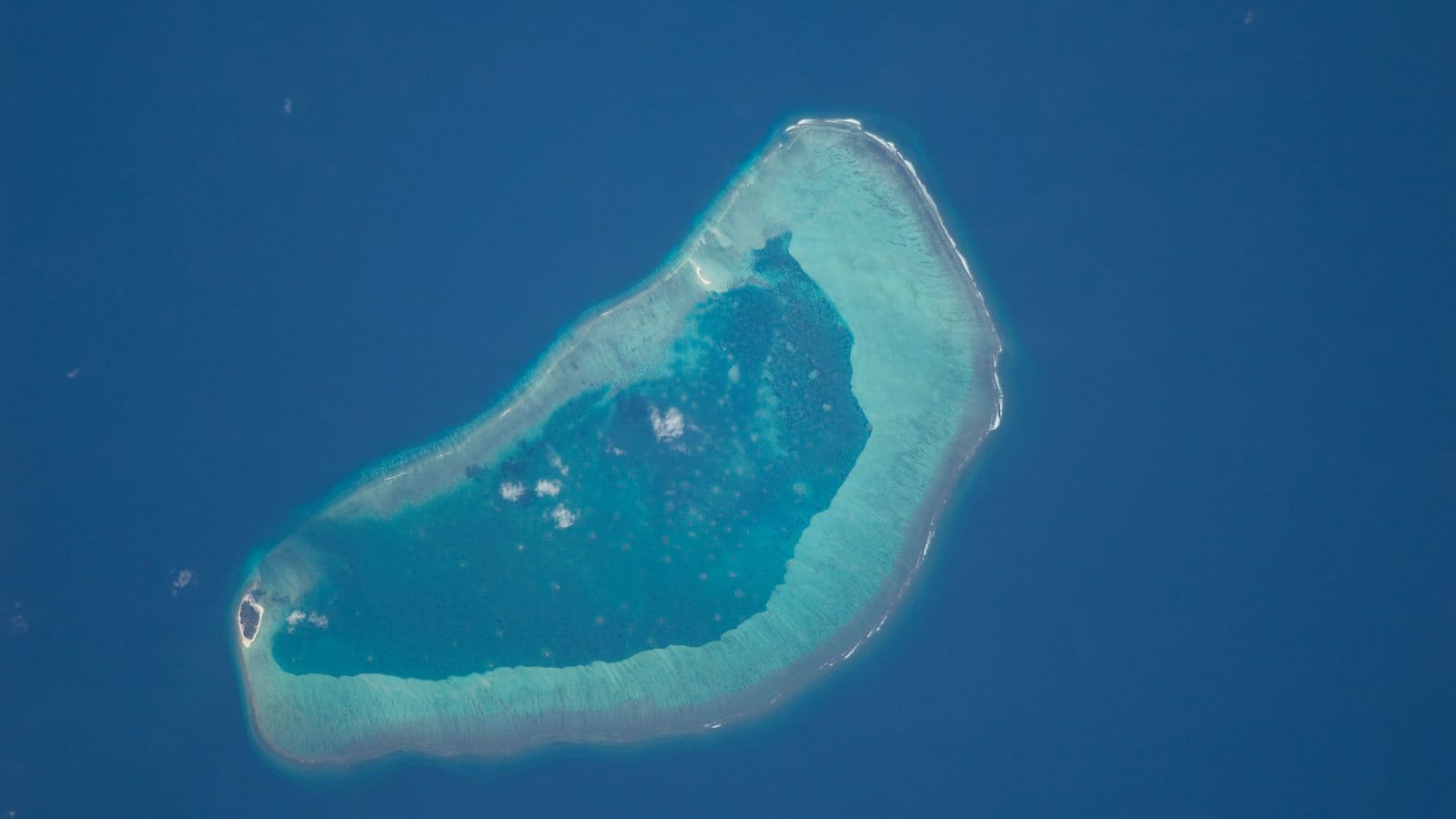
The image shows the reef, not a visitor experience
The lead image is a NASA photograph taken from the International Space Station on 12 October 2009. Its catalogue identifies the geographic feature as Bitra Reef in Lakshadweep. The image is public domain and is cropped for this page.
It documents the reef’s setting from orbit. It does not prove beach conditions, reef health, fishing pressure, wildlife, diving access or what a traveller would see from a ship.
What the official pages do not establish
The Bitra page has a broad access label. The general How to Reach guide describes passenger ships for Lakshadweep, but neither source publishes a current Bitra tourist sailing, landing arrangement or accommodation record.
The previous page claimed that tourists could sail past, that research access was possible, and that visitor accommodation did not exist. None of those claims was supported by a current primary source, so they have been removed.
If Bitra appears in a proposed itinerary
Ask the issuer to provide, in writing:
- the exact permitted island and activity;
- whether the plan involves landing or remaining aboard;
- the vessel, date and passenger confirmation;
- the return or onward sector;
- any accommodation name if an overnight is proposed.
Cross-check the island endorsement through the entry-permit guide and the transport record through the ship-ticket guide. A map, package name or verbal assurance is not enough.
Read Bitra in context
Kiltan and Chetlat are the nearest northern profiles in this guide, while Amini provides a clearer officially documented craft story. Use the islands hub to understand the geography without assuming a northern-island route is available.
What remains unconfirmed
The sources checked on 15 September 2026 do not publish current Bitra tourist access, a passenger timetable, a landing arrangement, an activity schedule, accommodation inventory or package departure.
Bitra is a documented island, not a documented holiday product.
Questions
How small is Bitra Island?
The Administration records 0.105 sq km of land, 0.57 km of maximum length and 0.28 km of width at the broadest point.
What is the population of Bitra?
The official island page records 271 people in the 2011 Census. This page does not substitute a later estimate.
How large is Bitra's lagoon?
The Administration records a lagoon area of 45.61 sq km. The figure describes geography, not visitor access or an activity area.
Can tourists currently visit Bitra?
The reviewed sources do not publish current tourist inventory for Bitra. They do not establish a landing, sail-past, research visit or package departure available to travellers.
Does Bitra have tourist accommodation?
No reviewed primary source establishes a currently bookable property or room inventory on Bitra.
Sources
- Lakshadweep Administration: Bitralakshadweep.gov.in · read 15 Sept 2026
- Lakshadweep Administration: How to Reachlakshadweep.gov.in · read 15 Sept 2026
- Lakshadweep Administration: Entry Permitlakshadweep.gov.in · read 15 Sept 2026
- NASA photograph record: Wikimedia Commonscommons.wikimedia.org · read 15 Sept 2026
Permit rules, fees, schedules and island access change without notice. Where a figure on this page matters to your booking, open the source above and check it against the current official position before you pay.